
By Zayele Gosling and Omari Green #albiontoatlas
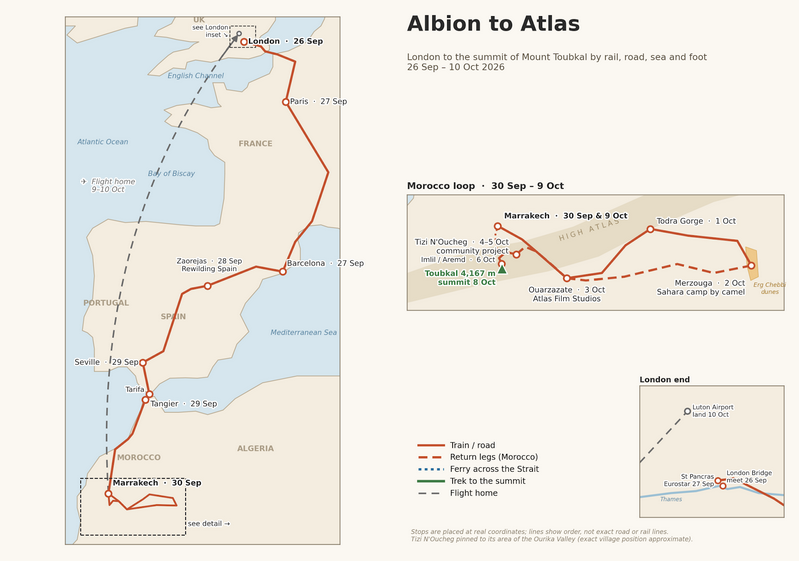
Our journey to Morocco is about much more than simply getting from A to B. We’re travelling completely flight free, making our way across Europe by train before continuing towards Morocco. We wanted to see what travelling this distance without flying would actually be like, but also understand how the way we travel can affect the environment. And just like that, the journey began.
Day 1: London
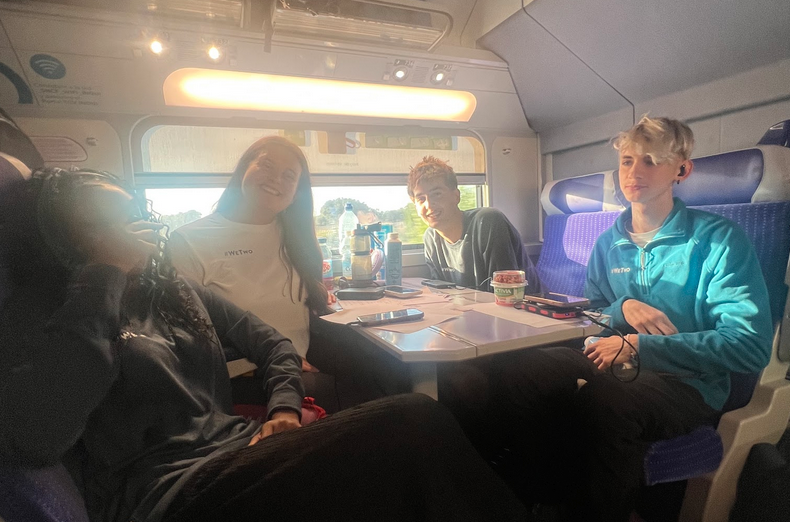
We first met at London Bridge, with a group of young people from different parts of the UK all coming together for the WeTwo Foundation expedition. For quite a few of us, this was the first time we had ever met each other. So yes, there were definitely a few awkward “nice to meet you” moments at the beginning. Luckily, that did not last very long.
We headed to our hostel for the night and had some amazing burgers and chips for dinner. After travelling and meeting everyone, that food was definitely needed. We then played a game where everyone had to write down two facts about themselves, and the other team had to guess who they belonged to. It sounds like a pretty simple game, but somehow it completely changed the atmosphere. People started laughing, guessing each others truths and telling stories. Before we knew it, the awkwardness had pretty much disappeared.
Later on, everyone went back to their rooms to chill for a bit. Well… Most people did. Somehow, everyone ended up back downstairs around one table, talking and playing cards. It was actually really nice to see. We had literally met that day, but everyone was already getting along. It was one of those moments where you realise that this trip is probably going to be about more than just the places we visit.
Eventually, we realised we actually needed to sleep because we had an early morning ahead of us.
Day 2: France to Barcelona
The next morning, we headed towards France. After the early start, everyone was absolutely exhausted, so the train became the perfect place to catch up on some much needed sleep. Once breakfast finally kicked in, everyone started coming back to life. Then we found out we had a SEVEN HOUR TRAIN JOURNEY to Barcelona.
Seven.
Hours.
It sounds horrible, but honestly, it wasn’t too bad. We talked, slept, ate and started organising the different roles we would have throughout the expedition, including social media, blogging and documenting everything happening along the way. Eventually, after what felt like forever, we arrived in Barcelona, Catalonia, Spain.
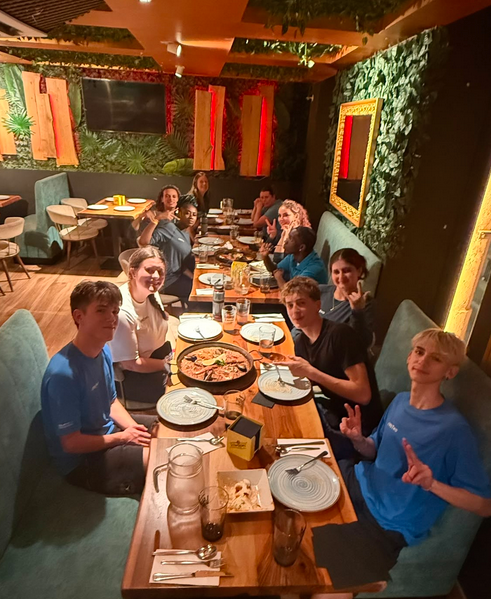
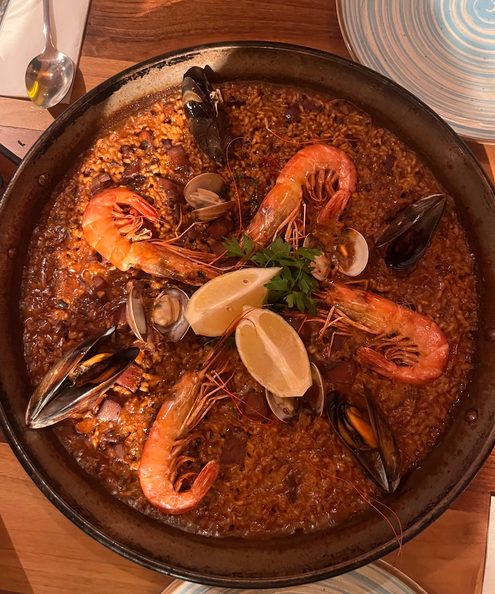
We got onto a coach and headed to our hotel, where everyone finally had some time to relax before dinner. And the food did not disappoint. We had paella, king prawns, clams and mussels, alongside the inevitable Margherita pizza. Dinner became another chance for everyone to sit together, talk and get to know each other. Then came the realisation that we had another early morning.
Next stop: Madrid.
Why Travel by Train?
Travelling flight free has definitely made us think more about the environmental impact of how we travel.
One of the comparisons we looked at showed a journey producing 460 kg of CO₂e, compared with 3,892 kg of CO₂e for a higher emission journey.
That’s a difference of around 3.43 tonnes of CO₂e, with the higher emission journey producing around 8.5 times as much which on average is equivalent to powering a uk home for a year!
Seeing the numbers next to each other made the difference a lot easier to understand. But the interesting thing about travelling by train wasn’t just the carbon footprint. We actually got to see everything in between.
Instead of getting on a plane in London and waking up in Morocco, we travelled through different countries, saw different landscapes and experienced different trains, stations, foods and cities. It definitely took longer. There were definitely moments where we were tired. And yes, there were definitely moments where seven hours on a train felt like seven years. But that became part of the experience.
The journey itself started becoming part of the expedition. We had time to properly get to know each other, see places we might otherwise have flown straight over and actually experience the distance we were travelling. And we’re not even finished yet.
From London to France, France to Spain, and now onwards towards Morocco. There are still plenty more trains, roads, landscapes and experiences to come. The journey is only just beginning.
Day 3: Horses & Bison (Madrid)
By Zayele Gosling and Omari Green
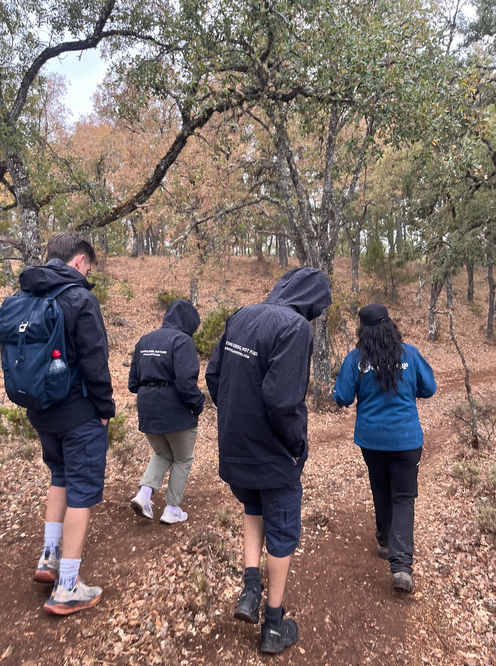
There was one problem… We were having terrible luck finding the bison.
After travelling out into Spain’s countryside around Dehesa de Villanueva, we were ready to see the wildlife we had been learning about. Instead, we searched. And searched. And searched. Eventually, one member of the expedition decided that conventional methods clearly weren’t working.
So Omari, our completely unofficial Animal Engineering Expert, decided to create the “Bison Summoning Dance”, which he named: “Bison, Come Here Now.”
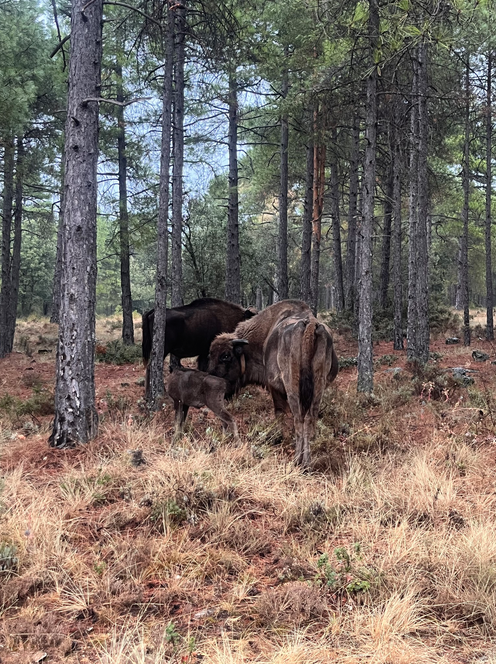
The method was extremely scientific. First, raise both hands above your head and put your palms together. Then rub them together above your head while holding your breath. After one or two seconds, slowly separate your hands. This is the important bit. As your hands open, start with a tiny hum and slowly work your way towards the closest bison sound you can make. Then quickly bring your hands together again and hold your breath. Repeat as necessary. We had absolutely no reason to believe this would work. Somehow, about 30 minutes later, we found the bison. Coincidence? Omari says absolutely not.
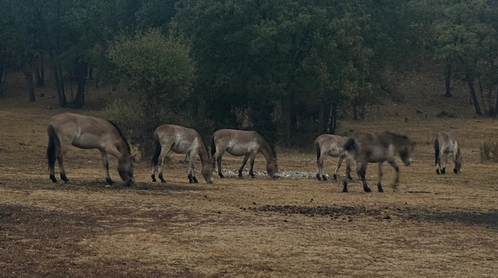
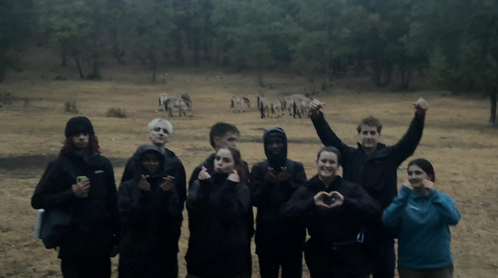
The bison weren’t the only animals we found either. We also managed to see the Przewalski’s horses, giving us the chance to watch them moving through a landscape that the rewilding project is helping to restore.
What Actually Is Rewilding?
Before seeing the animals, we met Soraya, who introduced us to the work being done to restore and protect the natural environment.
Rewilding is basically about giving nature the chance to recover and allowing wildlife and ecosystems to thrive again. The area we visited has been affected by human activity, including agriculture, deforestation and hunting. The project is working to restore the land and create an environment where wildlife can live more freely. But rewilding doesn’t simply mean leaving everything completely alone. The team still has to carefully manage the landscape. For example, trees need to be spaced appropriately in some areas to help reduce the spread of wildfires.
One of the things Soraya said that really stuck with us was that sometimes the best thing people can do for nature is simply give it space to recover in the middle of these challenges.
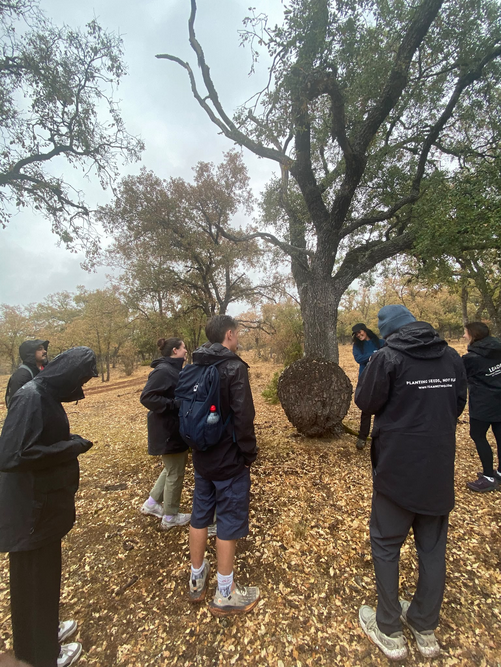
Giving Wildlife a Future
We learned about the different animals living in the area, including deer, wild horses and bison. Protecting these animals also means protecting them from illegal hunting and poaching. Soraya explained how meaningful it is to see animals living freely in areas that she and others have helped restore. Seeing wildlife return to these spaces makes the work feel real. But the project has its challenges too.
Some of the nearby villages have small and ageing populations, meaning there aren’t always enough people around to look after such large areas of land. Because of this, the project relies on support from charities, philanthropists like Cartier, and businesses that want to help protect nature. Land that was previously used for hunting has been purchased and transformed into spaces where animals can roam more freely. The work has been developing for around five years, and the changes are already becoming visible.
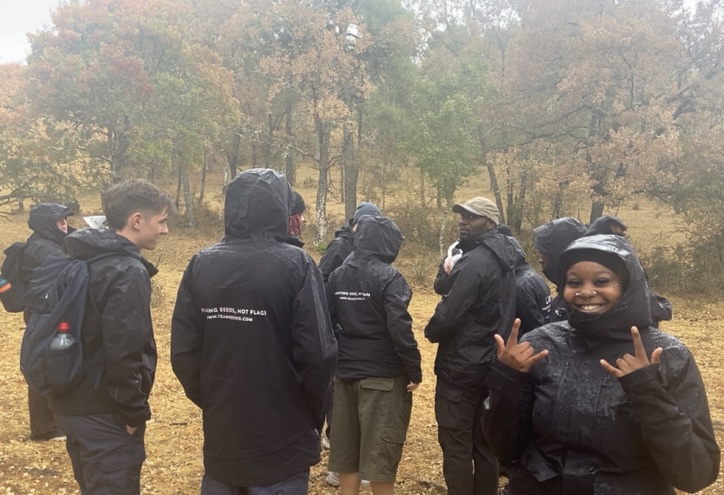
Making a Difference Starts Small
One of the biggest messages that stayed with us was that you don’t need to be rich, famous or have thousands of followers to make a difference.
Soraya explained how even a young person living in a small village can have an impact on their local environment. That idea actually connected quite strongly with the purpose of our own expedition. We’re not here simply to see the world. We’re here to take part, learn, contribute and give something back. Whether that means helping communities in Morocco, completing our own Pay It Forward Projects back home or learning from projects like this one, the idea is the same. Try to leave something better than you found it. And sometimes, that can start with something as simple as giving nature the space it needs.
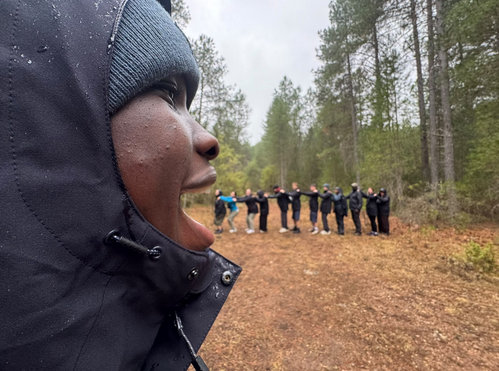
A Day We Won’t Forget
After a full day of learning, travelling and searching for wildlife, we headed back to our amazing villa hotel. Dinner was a solid 10/10. We had a three course meal, dessert, plenty of conversation and a chance to actually sit down and take in everything we had experienced. We even adopted the local cat into our group. Harry named him Cheesecake. Obviously. After everything we had seen that day, from learning about rewilding to finally finding the bison and horses, it was the perfect way to finish. But our expedition wasn’t stopping there.
The next morning brought another early start. And this time, we were heading somewhere completely different.
Morocco was calling.